
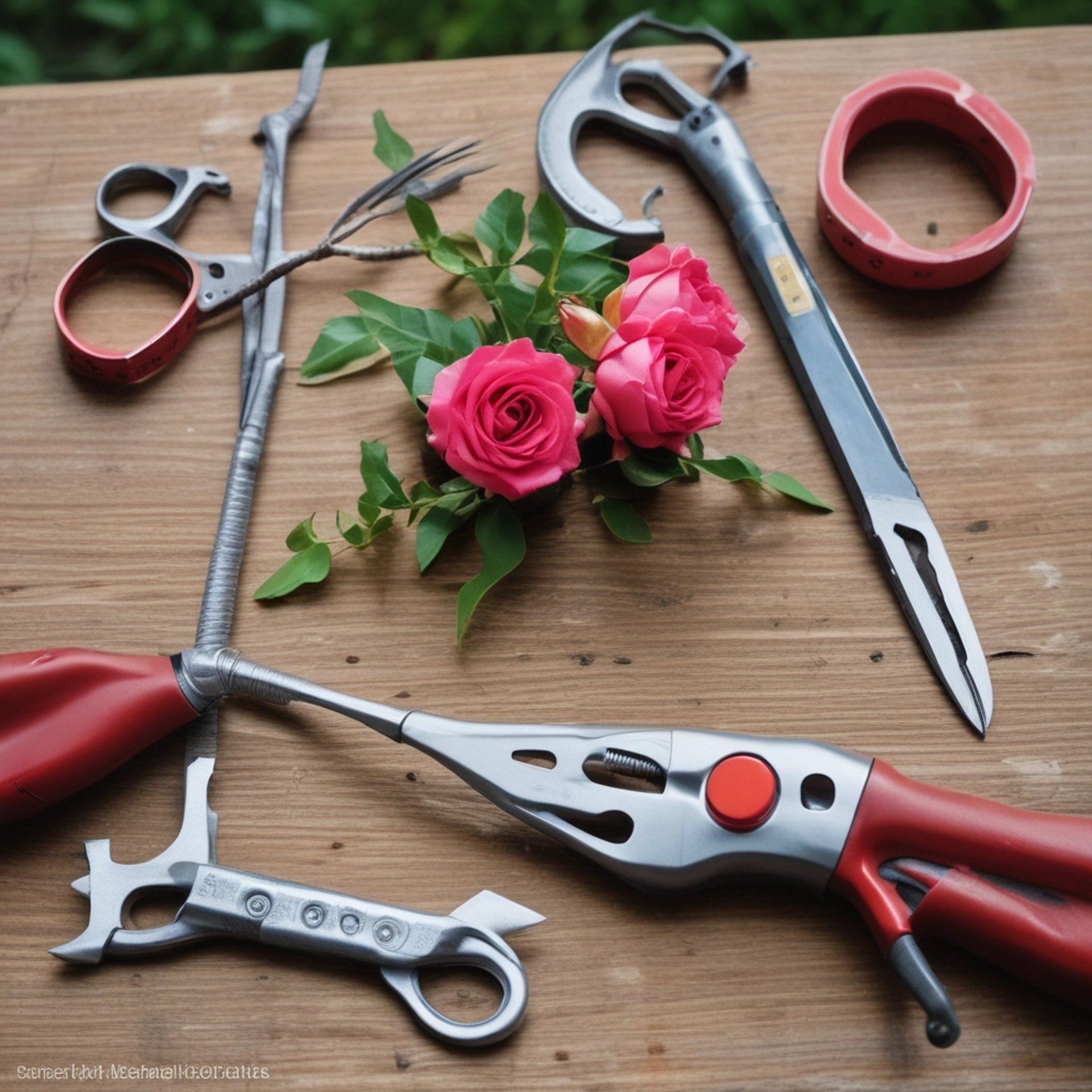
The Rosarium Pruning Masterclass
Tips and tricks for thriving roses in Australia’s unique climate



The Rosarium Pruning Masterclass
Timing: Mid-June to late July (Temperate/Cool) | August (Subtropical/Tropical)
Pruning is not just "cutting back"; it is an act of rejuvenation. In the Australian climate, roses are vigorous. Without a hard annual prune, they become woody, flower poorly, and are more susceptible to fungal diseases like Black Spot.
Phase 1: The Essential Toolkit
Before you make the first cut, ensure your tools are sterilised (use methylated spirits or a 10% bleach solution) to prevent spreading canker or viruses.
Bypass Secateurs: For clean, scissor-like cuts (avoid anvil types which crush stems).
Loppers: For thick, woody canes at the base.
Pruning Saw: For "renovating" old, gnarled trunks.
Long Leather Gloves: Essential for protection against Australian rose thorns.
Sealant/Wood Glue: To dab on fresh cuts to prevent the Rose Pith Borer (common in NSW and QLD).
Phase 2: The "Standard Three" (Universal Rules)
Regardless of the rose type, always start with the 3 Ds:
Remove Dead wood: Brown, shriveled, or brittle canes.
Remove Damaged/Diseased wood: Look for black cankers or scale-infested stems.
Remove Dying wood: Canes that are yellowing or clearly unproductive.
Phase 3: Type-Specific Techniques
1. Hybrid Teas & Floribundas (The "Open Vase")
Goal: Maximum airflow to combat Australian humidity.
Step 1: Identify 3–5 strong, young, green canes (the "framework").
Step 2: Remove all growth from the center of the plant. You want a bird to be able to fly through the middle without hitting a branch.
Step 3: Cut the remaining framework canes back by 50% to 60%.
Step 4: Always cut to an outward-facing bud. This ensures new growth moves away from the center.
2. Standard (Tree) Roses
Goal: A balanced, "lollipop" umbrella shape.
Step 1: Prune the head exactly like a Hybrid Tea (Open Vase).
Step 2: Ensure the "ball" is balanced. If one side is heavier, prune it harder to encourage regrowth on the weaker side.
Step 3: Remove "water shoots" or suckers growing from the long main trunk or the ground—these are from the rootstock and will kill your rose.
3. Climbers & Ramblers
Goal: Horizontal tension for vertical flowers.
The Golden Rule: Never prune a climber hard in its first 2-3 years.
Step 1: Identify the "Main Canes" (long, structural stems) and "Lateral Shoots" (the flowering side-branches).
Step 2: Pull the main canes down and tie them horizontally to your fence or trellis. This forces the sap to distribute evenly, creating flowers all along the stem rather than just at the very top.
Step 3: Prune the flowering laterals back to 2 or 3 buds from the main cane.
Phase 4: The Clean-Up (Critical for Australia)
Strip the Leaves: Manually pull off any remaining leaves. This forces the rose into a brief, deep dormancy.
Clear the Floor: Rake up every single leaf and stem. In Australia’s climate, fungal spores (Black Spot) overwinter in the soil. Do not compost these.
Winter Wash: Spray the bare canes and the surrounding soil with Lime Sulphur. This "burns" off scale and fungal spores before the spring bud-burst.
Troubleshooting: The "Aero-Rose" Quick-Check
"I'm scared I've cut too much!" Don't panic. In most Australian zones, roses are incredibly resilient. It is almost impossible to kill a healthy rose by over-pruning. In fact, a "hard" prune often results in the most spectacular spring show you've ever had.
Get tips and tricks for thriving roses
Passion for Roses
Helping Australian gardeners nurture and care for their roses with practical tips and heartfelt advice.


150+
15
Trusted Advice
Loved Here
Rose Blooms
Beautiful roses thriving in Australian gardens.


